


Guide to Living with Hypermobile EDS
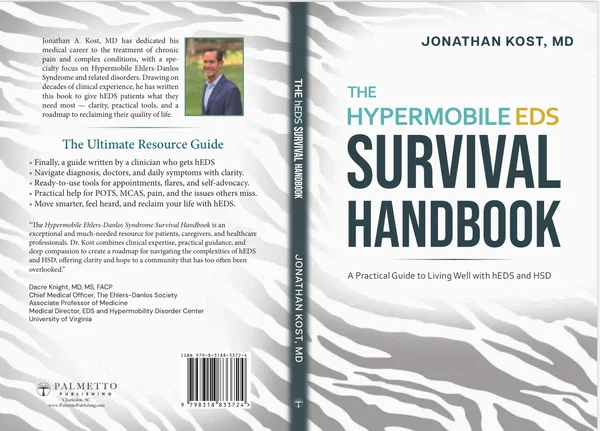
Whether you’re newly diagnosed, supporting a loved one, or searching for answers after years of uncertainty, The Hypermobile EDS Survival Handbook provides practical guidance, evidence-based insights, and real-world strategies to help you navigate life with confidence.
Trusted Guidance for a Complex Condition
Living with hEDS can be overwhelming. Many spend years seeking answers and understanding how it affects daily life.
The Hypermobile EDS Survival Handbook simplifies this journey, educating and supporting patients and families.
A roadmap to help you stand stronger, move smarter, and reclaim your life with hEDS
What You'll Learn
Practical Knowledge.
Real Solutions.
Better Understanding.
Understanding Hypermobile EDS
Learn what hEDS is, how it affects the body, and why symptoms can vary from person to person.
Diagnosis & Medical Care
Understand the diagnostic process, common misconceptions, and how to work effectively with healthcare providers.
Managing Daily Life
Discover practical strategies for mobility, pain management, fatigue, and everyday wellness.
Supporting Long-Term Health
Explore lifestyle approaches that can help improve quality of life and support long-term wellbeing.
Your Trusted Guide to Understanding and Managing Hypermobile EDS.
A Reliable Resource for Patients and Families
When facing a complex condition, accurate information matters.
The Hypermobile EDS Survival Handbook was designed to provide readers with a trusted source of knowledge, helping them better understand their diagnosis, advocate for themselves, and make informed healthcare decisions.
Benefits
- Clear, easy-to-understand explanations
- Practical advice for everyday living
- Guidance for families and caregivers
- Educational support for healthcare discussions
- Resources you can return to throughout your journey
- Try the Interactive Guide to Help Use the Book
Meet the Author
Jonathan A. Kost, MD
Jonathan A. Kost, MD, is a board-certified anesthesiologist and interventional pain medicine specialist with more than three decades of clinical, academic, and leadership experience. He has devoted his career to the care of patients with complex, chronic, and often misunderstood conditions, including hypermobile Ehlers-Danlos syndrome and Hypermobility Spectrum Disorders.
Dr. Kost completed his Pain Management Fellowship at Brigham and Women’s Hospital, Harvard Medical School, following an anesthesiology residency training at Beth Israel Medical Center/Mount Sinai Hospital.
Educational Tools & Downloadable Resources
Access carefully selected materials designed to support patients, families, caregivers, and healthcare professionals.
Available Resources
- Educational Guides
- Patient Worksheets
- Symptom Tracking Tools
- Healthcare Discussion Guides
- Family Support Resources
- Downloadable Documents
Submit a Review
Visit planning and intake

Appendix A: Initial Clinician Intake Form
Helps patients and clinicians prepare for the initial evaluation, organize history, and streamline the diagnostic workup for hypermobile EDS.
https://t2m.co/68O7NPR

Appendix B: Established Patient Follow‑Up Form
Flags new or worsening issues and prompts patients to prioritize their top three concerns and must‑ask questions for the visit.
https://t2m.co/5oOag3Z

Appendix C: Appointment Worksheet
Helps patients plan any medical appointment by organizing questions, goals, and follow‑up action items.
https://t2m.co/2YdJNpU

Symptom tracking and RED flags (Emergent Work-Up)

Appendix D: Hypermobility Patient Intake Form
Supports systematic review of symptoms and history so important details are not missed during time‑limited appointments.
https://t2m.co/EwfQnh0

Appendix E: Symptoms That Require Emergent Work‑Up and Treatment
Lists symptoms that may signal serious or life‑threatening conditions and indicate the need for immediate or same‑day medical care.
https://t2m.co/RwifJHd

Communication prompts

Appendix F: Patient–Provider Questionaire Sheet
Provides question prompts so patients do not leave an appointment thinking, “Why didn’t I ask that?”
https://t2m.co/qxQisoJ

Emergency and Alert CARDS

Appendix G: POTS Emergency Card
Alerts responders to a diagnosis of POTS and provides key information to prevent misdiagnosis and guide safe acute care.
https:/ /t2m.co/bAMjFxx

Appendix H: MCAS Emergency Card
Summarizes MCAS diagnosis, typical reactions, and critical emergency instructions for mast‑cell–mediated events.
https://t2m.co/0Dxsb6Q

Appendix I: hEDS Surgical/Anesthesia Alert Card
Highlights key perioperative and anesthesia considerations for patients with hEDS to share with surgical and anesthesia teams.
https://t2m.co/HKRJrGj

Appendix J: Emergency Room Alert Card
Provides a concise summary of diagnoses, risks, and preferred approaches to care for use in any emergency department.
https://t2m.co/k2Mq0cX

Treatment and emergency care guidance

Appendix K: hEDS Common Medications & Treatments
Provides an overview of commonly used medications and therapeutic categories relevant to hEDS management.
https://t2m.co/JWFro4a

Appendix L: Emergency Room Guide
Outlines key considerations for emergency clinicians caring for patients with hEDS and related conditions.
https://t2m.co/zcy6si9

Companion Forms

Initial Clinician Intake Form
Helps you and your clinician prepare for the initial evaluation by organizing your history and streamlining the diagnostic workup for hypermobile EDS.
https://t2m.co/68O7NPR

Established Patient Follow‑Up Form
Flags new or worsening symptoms and prompts you to prioritize your top three concerns and must-ask questions before each return visit.
https://t2m.co/5oOag3Z

Appointment Worksheet
Helps you organize your questions, visit goals, and follow-up action items so nothing falls through the cracks.
https://t2m.co/2YdJNpU

Companion Forms
Initial Clinician Intake Form
Helps you and your clinician prepare for the initial evaluation by organizing your history and streamlining the diagnostic workup for hypermobile EDS.
Established Patient Follow‑Up Form
Flags new or worsening symptoms and prompts you to prioritize your top three concerns and must-ask questions before each return visit.
Appointment Worksheet
Helps you organize your questions, visit goals, and follow-up action items so nothing falls through the cracks.